
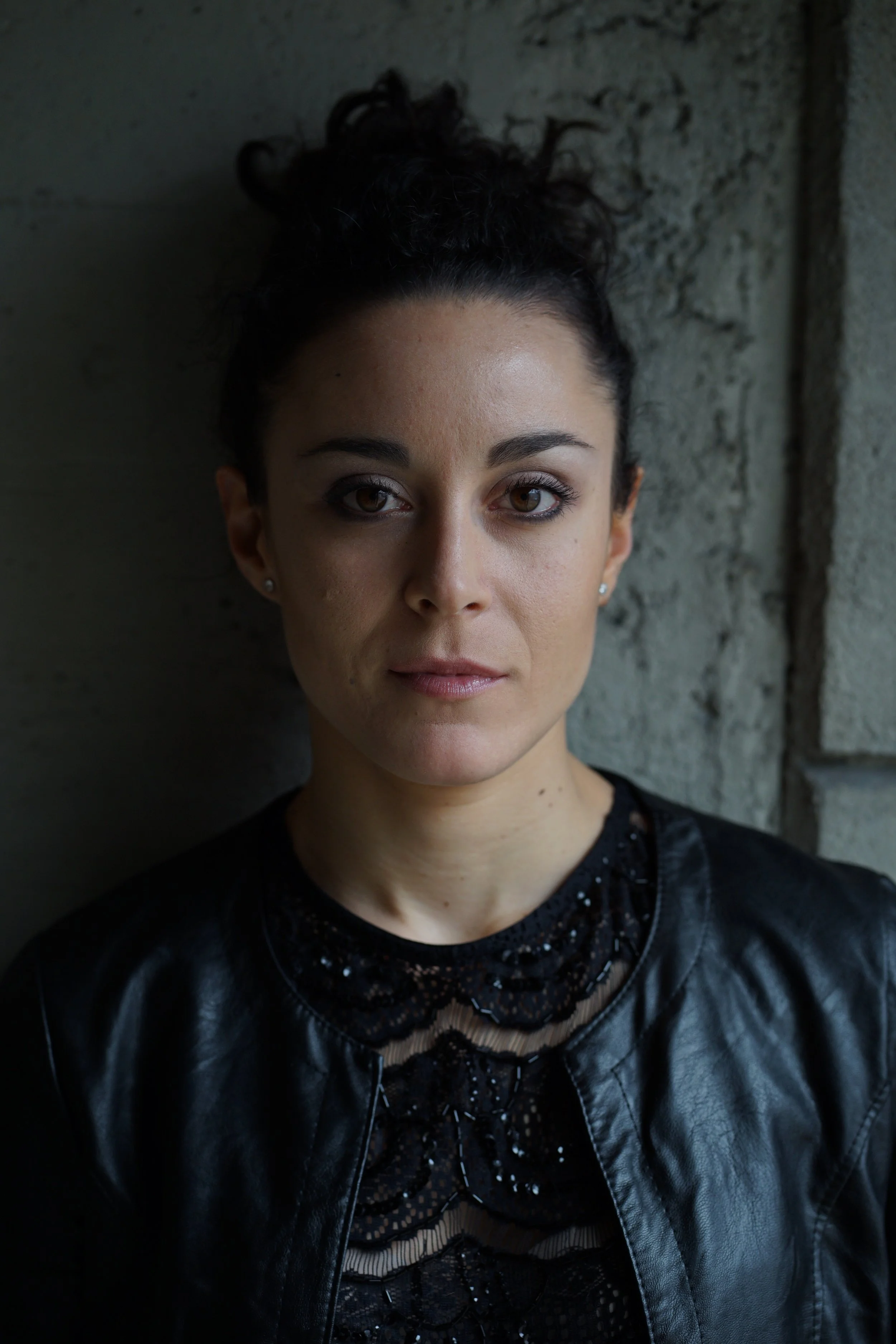
Beatrice Panero is an Italian choreographer, performer, movement educator, and rehearsal director based in Germany. Her work bridges contemporary dance, movement research, education, and health-oriented practices, creating meaningful connections between artistic excellence, embodied learning, and human wellbeing.
She graduated from the Codarts Rotterdam Dance Academy in 2012 and completed her Master’s degree in Dance Pedagogy at the Palucca University of Dance Dresden in 2025.
As a professional dancer, Beatrice performed with several theatre and dance companies across Germany and Switzerland, including Gerhart-Hauptmann-Theater Görlitz-Zittau, Theater Osnabrück, Theater Ulm, Theater Trier, and Bühne Bern. She also worked at the TPZ Theaterpädagogisches Zentrum Lingen, where she contributed to pedagogical and artistic projects within a strong community-based and educational context. These years of stage and teaching experience continue to inform her artistic and pedagogical practice.
Alongside her performing career, Beatrice has developed an internationally recognized choreographic practice. Her works have been presented at renowned festivals and platforms, including the International Solo-Tanz-Theater Festival Stuttgart, where she received the 3rd Prize for Best Choreography, the International Choreography Competition Hannover, and The Future Dance Festival in New York City. In 2022, she was awarded the Best Duo Prize at Barnes Crossing for her collaborative choreographic work. In 2024, she was selected for the International Choreographer Residency at the American Dance Festival in Durham, North Carolina.
As a movement educator and trainer, she has worked extensively with professional dancers, students, and communities. She has taught at institutions such as Tanzhaus Zürich, IG Tanz Zentralschweiz, TPZ Lingen, and numerous state theatres and dance companies throughout Germany and Switzerland, such as Theater Regensburg and Hessischen Staatsballett Wiesbaden. Her teaching integrates contemporary dance, somatic practices, movement analysis, and creative exploration, encouraging sustainable, intelligent, and expressive movement.
Since 2025, Beatrice has been serving as Training and Rehearsal Director of TANZ GIEßEN, Dance Ensemble at Stadttheater Gießen, where she supports artistic processes, dancer development, and the creation of new productions.
Discover What Drives My Work
My Approach
Beatrice Panero’s teaching practice is rooted in a deep curiosity for how movement is learned, internalised, and transformed over time. She approaches training not as the transmission of fixed forms, but as a dynamic process of awareness, adaptation, and discovery. Drawing from contemporary dance, somatic practices, Countertechnique, and movement analysis, her classes place strong emphasis on clarity of physical principles—such as weight, spatial intention, coordination, and efficiency—while always maintaining openness to individuality and artistic expression.
Central to her approach is the observation of movement habits: how each body organizes effort, perception, and choice. Rather than correcting from an external ideal, she guides dancers toward a more refined internal dialogue, where efficiency, curiosity, and precision can coexist. Her work encourages dancers to expand their physical intelligence, build resilience, and develop a sustainable relationship to training and performance.
At the same time, Beatrice places strong importance on presence, collectivity, and creative risk-taking. Technique is never separated from imagination; instead, it becomes a tool for articulation and authorship within movement. Her teaching environment aims to be both demanding and supportive—challenging dancers to refine their physicality while cultivating trust, autonomy, and joy in dancing.
Research and Method Development
Beatrice Panero’s current research focuses on developing her movement methodology, StepCo®, which integrates her ongoing exploration of movement habits, embodied learning, and sustainable training practices. Within StepCo®, she is further developing Soft Matter, a complementary branch of the method that investigates movement texture, quality, and plasticity. In contrast to structured technical training, Soft Matter works through fixed movement frameworks derived from analytical exercises, allowing dancers to explore subtle variations of dynamics, sensation, and expressive detail within a defined physical structure.